

Auckland Shockwave Therapy Specialists. BOOK NOW

Running Injury Treatment Auckland
Helping runners stay on the road, trails, and start lines they care about most
Running has a unique way of simplifying life.
For some people it is performance and competition. For others it is headspace before work, a social outlet, stress relief or simply a way of staying healthy.
When running is taken away by injury, the impact often extends far beyond physical pain alone.
At Movement Mechanics, we work with runners across Auckland and the North Shore experiencing everything from recent training setbacks through to long-standing injuries that continue returning despite rest, rehabilitation or previous treatment elsewhere.
Rather than viewing running injuries as isolated problems, assessment focuses on understanding how training load, tissue capacity, recovery, biomechanics and lifestyle factors interact to influence injury development and recovery.
Because for most runners, the question is rarely “How do I stop the pain? The real question is “How do I keep running without this happening again?”

Running is demanding for a reason
Running places repetitive mechanical demands on the body that are unlike almost any other activity.
A typical runner may take thousands of strides during a single session. Over weeks and months, tendons, muscles, bones and joints are constantly adapting to these stresses.
Most of the time, this adaptation process works remarkably well. Problems typically arise when the demands being placed on the body begin exceeding its ability to recover, adapt or tolerate those loads effectively.
This doesn’t necessarily mean training was wrong. It often means the balance between stress and recovery has gradually shifted. Sometimes that shift occurs quickly after a sudden increase in mileage.
Sometimes it develops slowly over months without the runner realising anything has changed until symptoms appear.
Understanding where that balance broke down is often one of the most important parts of rehabilitation.
The running injuries we commonly see
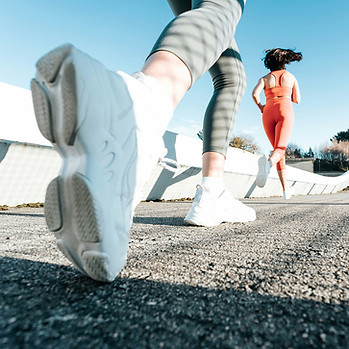
Not all running injuries behave the same way. Some develop gradually and become increasingly noticeable over time. Others appear suddenly following a change in training volume, terrain, footwear or intensity.
Common presentations seen at Movement Mechanics include:
Pain, stiffness or sensitivity through the Achilles tendon, particularly during running, hill work or after periods of rest.
Pain under the heel or arch, often most noticeable first thing in the morning or after periods of inactivity.
Runner’s Knee
Pain around or behind the kneecap that is aggravated by running, hills, stairs, or prolonged sitting.
Pain along the inner shin, commonly associated with increased training volume or intensity.
Calf Strains
Acute or recurring calf injuries that often limit running performance and confidence.
Persistent tightness, recurring strains or discomfort affecting speed, stride length and training consistency.
Pain around the outside of the hip, gluteal region or pelvis that becomes aggravated by running volume and repetitive loading.

When rest stops working
One of the most frustrating experiences for runners is when injuries appear to settle during reduced training, only to return again as soon as mileage increases.
This often creates the illusion that the body has recovered when, in reality, the underlying issue has not fully adapted to the demands being placed upon it.
Many runners become trapped in a cycle of:
reduce training → feel better → increase training → flare again → repeat
Over time, confidence in the injured area often decreases just as much as physical capacity.
This is particularly common with tendon injuries such as Achilles tendinopathy and plantar heel pain, where symptoms can fluctuate significantly despite appearing improved on the surface.
Successful rehabilitation often requires more than simply reducing pain. It requires helping tissues regain the ability to tolerate the demands of running again.
A Modern Approach To Running Injury Rehabilitation
Every runner arrives with a different history.
Different goals.
Different training loads.
Different definitions of success.
For some, success means completing their first 5km. For others, it means returning to marathon preparation or competitive sport.
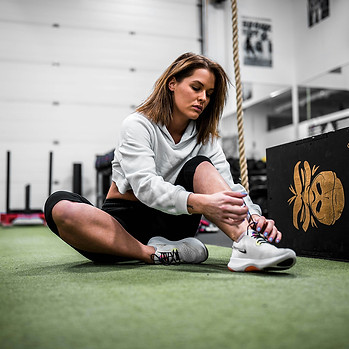
This is why rehabilitation at Movement Mechanics is tailored around the individual runner rather than the diagnosis alone.
Depending on the presentation, management may involve osteopathy, progressive rehabilitation, running load modification, Western Medical Acupuncture, EMS shockwave therapy or EMS high-power laser therapy.
The objective is not simply returning to running as quickly as possible. It is returning with greater resilience, confidence and long-term durability.
Shockwave Therapy For Running Injuries
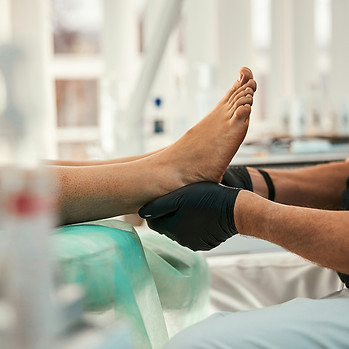
Movement Mechanics is one of the few clinics in New Zealand integrating both EMS Shockwave Therapy and Osteopathy within the same rehabilitation environment.
Shockwave therapy is most commonly used in longer-standing tendon and overload-related running injuries, particularly where symptoms have plateaued despite appropriate loading and rehabilitation.
Conditions frequently treated include:
-
Chronic calf overload presentations
For suitable presentations, shockwave therapy is integrated within a broader rehabilitation strategy rather than used as a standalone treatment.


GDT Certified
No GP referral needed
Appointments available
High Power Laser Therapy For Running Injuries
Running injuries do not always present in the same stage of recovery.
Some tissues are highly reactive and sensitive. Others have become chronically overloaded over time.
High-power laser therapy can often be integrated across both acute and chronic presentations and is frequently used alongside rehabilitation to support recovery and improve tolerance to loading.
For many runners, combining high-power laser therapy and shockwave therapy provides a valuable bridge between reducing tissue irritability and restoring long-term adaptation.

Located In Browns Bay, Trusted By Runners Across Auckland
Movement Mechanics Osteopathy is located inside Bays Health in Browns Bay and regularly works with runners from:
-
Browns Bay
-
Albany
-
Long Bay
-
Mairangi Bay
-
Takapuna
-
Milford
-
Silverdale
-
and the wider Auckland region.
Whether you’re preparing for your next event, returning from injury or simply trying to enjoy pain-free running again, our team is here to help.
Every runner has questions when pain starts interfering with training. Below are answers to some of the most common questions we receive about running injuries, recovery timelines, shockwave therapy, laser therapy and returning to running safely.
Book A Running Injury Assessment
If running has become limited by recurring pain, injury, or symptoms that keep returning despite your best efforts, the first step is to understand what may be driving the problem and which pathway is most appropriate moving forward.