
Achilles Tendinopathy Treatment in Auckland: How Laser Therapy, Shockwave Therapy & Osteopathy Accelerate Recovery

What Is Achilles Tendinopathy and Why Does It Become Chronic?
Achilles tendinopathy is a common overuse injury treated by an osteopaths affecting runners, athletes, and active individuals across Auckland’s North Shore. It presents as:
Morning stiffness in the Achilles tendon
Pain during or after activity
Localised thickening or tenderness
Reduced calf strength and performance

However, modern research shows Achilles tendinopathy is not simply inflammation it is a failed healing response driven by:
Neurogenic inflammation (substance P, cytokines)
Disorganised collagen structure
Altered tendon loading and biomechanics
Achilles tendinopathy is not simply an inflammatory condition it is a failed tendon healing response driven by neurogenic inflammation and disrupted cellular signalling.
There are two critical requirements for tendon healing:
Resolution of neurogenic inflammation
Re-expression of scleraxis (a key tendon regeneration marker)
When pro-inflammatory cytokines such as IL-1β and TNF-α are present:
Stem cells fail to differentiate into tendon tissue
Scleraxis expression is suppressed
Tendon healing stalls
Without addressing these factors, symptoms often persist or recur.
At Movement Mechanics Osteopathy, we focus on true Achilles tendinopathy treatment, targeting both pain mechanisms and tissue regeneration.
👉 This explains why many Achilles injuries become chronic despite rest or traditional therapy.
The Role of High-Power Laser Therapy (905nm) in Achilles Tendinopathy Treatment

What Is EMS DolorClast® High-Power Laser Therapy?
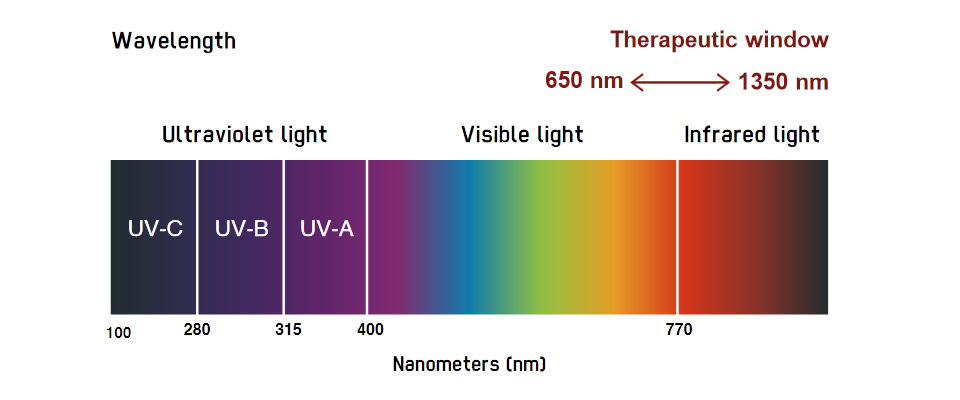
EMS DolorClast® High-Power Laser Therapy uses a pulsed 905nm wavelength to deliver deep, targeted energy into injured tissues.
Penetrates deep into tendon tissue
Target mitochondrial structures
Deliver high peak power without thermal damage
Unlike traditional therapies, this allows us to treat:
Deep tendon structures
Chronic inflammation
Pain pathways at a neurological level
Pulsed laser creates selective photothermolysis
Targets mitochondria and endoplasmic reticulum
Allows cellular signalling changes without overheating tissue
This makes it one of the most effective tools for:
Laser therapy pain relief
Laser therapy inflammation reduction
Accelerating tendon healing
How Laser Therapy Reduces Pain (Neuromodulation)
Laser therapy works by directly influencing the nervous system:
Reduces firing of pain fibres (C-fibres and A-delta fibres)
Decreases nerve hypersensitivity
Modulates neurotransmitters involved in chronic pain
Laser irradiation reduced nociceptor firing rates
Demonstrating a clear analgesic mechanism

Research shows laser therapy can reduce nociceptor activity and provide rapid pain relief within minutes of treatment, with effects plateauing after several minutes
👉 This is why many patients report immediate improvement after their first session.
Rapid pain relief after treatment
Reduced tendon sensitivity
Improved tolerance to loading
How Laser Therapy Targets Inflammation (Prostaglandin Reduction)
A key driver of Achilles tendinopathy is pro-inflammatory mediators, particularly prostaglandins.

Clinical evidence demonstrates:
Laser therapy reduces prostaglandin E2 levels
This directly reduces inflammation and pain signalling
Creates an environment for tendon repair
In Achilles tendinitis research:
Laser therapy significantly reduced inflammatory markers post-treatment
👉 This makes laser therapy for inflammation a critical first step in treatment.
PGE2 is a key driver of tendon pain
Reducing it restores a normal healing environment
Why 905nm Pulsed Laser Is Superior
Not all laser therapies are equal.
The EMS DolorClast® 905nm pulsed laser:
Penetrates deeper than lower wavelengths
Stimulates mitochondrial activity (ATP production)
Targets cytochrome c oxidase → cellular repair
Uses pulsed delivery to avoid overheating tissue
Research suggests pulsed 905nm laser creates selective photothermal and photobiomodulation effects, enabling high peak power without tissue damage
Shockwave Therapy for Achilles Tendinopathy
What Is EMS DolorClast® Shockwave Therapy?
Shockwave therapy uses acoustic energy to stimulate healing within damaged tendon tissue.
A process that concentrates energy into a biologically useful form, enabling cellular change
Mechanisms include:
Increased blood flow
Collagen synthesis
Breakdown of pathological tissue
Activation of mechanotransduction
At Movement Mechanics, we use EMS Swiss DolorClast®, the global gold standard.

Evidence-Based Benefits of Shockwave Therapy
Shockwave therapy is one of the most researched modalities in musculoskeletal medicine:
Over 100+ randomised controlled trials support its use
Improves pain and function in Achilles tendinopathy
Enhances tendon regeneration
Key mechanisms include:
Increased collagen synthesis
Improved tendon structure
Reduction of pathological neovascularisation
Stimulation of mechanotransduction
Why Shockwave Alone Is Not Always Enough
Tendon healing requires:
Resolution of neurogenic inflammation
Activation of regenerative pathways
Research highlights that:
Tendon regeneration cannot occur effectively in a persistently inflamed environment
👉 This is why combining therapies is critical.
Why We Combine Laser Therapy + Shockwave Therapy
At Movement Mechanics Osteopathy, we use a layered treatment approach:
If neurogenic inflammation is present → use 905nm laser first
Then apply shockwave therapy

Step 1: Laser Therapy
Reduces inflammation
Decreases pain
Prepares tissue
Step 2: Shockwave Therapy
Stimulates regeneration
Drives tendon healing
Step 3: Osteopathy & Rehabilitation
Restores movement
Corrects load
Prevents recurrence
Clinical guidance suggests:
Laser therapy applied before shockwave enhances treatment outcomes
The Role of an Osteopath in Achilles Tendinopathy Treatment
Why Choose an Osteopath on the North Shore?
If you’re searching for an osteopath North Shore, it’s important to understand:
Tendinopathy is not just a local issue.

At Movement Mechanics, we assess:
Foot and ankle mechanics
Calf strength and load tolerance
Knee and hip biomechanics
Running or sport-specific movement patterns
Osteopathy + Load Management = Long-Term Results
Evidence shows:
Tendons respond to progressive mechanical loading
Mechanical loading increases scleraxis and collagen I expression
These are essential for tendon repair
Delayed or poor loading leads to prolonged symptoms
Our approach includes:
Individualised loading programmes
Strength and conditioning
Movement retraining (VALD HumanTrak)
👉 Without proper loading:
Tendons do not remodel
Symptoms persist
What to Expect from Achilles Tendinopathy Treatment
Typical Treatment Timeline
Weeks 1–2
Laser therapy (2–3 sessions/week)
Pain reduction + inflammation control
Weeks 2–6
Shockwave therapy (1 session/week)
Progressive tendon loading
Weeks 4–12
Strength, plyometrics, return to sport
Conditions We Commonly Treat
Mid-portion Achilles tendinopathy
Insertional Achilles pain
Chronic tendon degeneration
Post-activity flare-ups
Running and sports injuries
Why Movement Mechanics Osteopathy?
✔ Leading osteopath North Shore Auckland
✔ EMS DolorClast® technology (laser + shockwave)
✔ Evidence-based treatment protocols
✔ ACC registered clinic
✔ Southern Cross Easy-Claim available

Book Achilles Tendinopathy Treatment in Auckland
If you’ve been searching for:
Achilles Tendinopathy Treatment Auckland
Laser therapy for pain
Laser therapy inflammation treatment
Osteopath North Shore
→ You’re in the right place.
👉 Take the First Step
Early intervention leads to:
Faster recovery
Better long-term outcomes
Reduced recurrence
Final Thoughts — A Smarter Approach to Tendon Pain
Achilles tendinopathy requires more than rest or passive care.
It requires:
Precision
Evidence
The right combination of therapies
At Movement Mechanics Osteopathy:
We don’t just treat pain — we restore movement, rebuild tissue, and optimise performance.
Movement Matters.
Jonathan Hall M.Ost, BAppSci (Human Biology), PGCertHSc (Acupuncture), GradDipHeal
Jonathan Hall is the founder and principal Osteopath at Movement Mechanics Osteopathy. Jonathan specialises in Shockwave Therapy and Western medical acupuncture and a Key opinion leader for EMS Swiss DolorClast. A fully qualified Osteopath registered with OCNZ, PNZ, PAANZ and ACC, Jonathan also founded Auckland Shockwave Therapy to help bring evidence-based Shockwave treatment to New Zealand using the industry-leading EMS Radial Shock Wave device.
Book an appointment with Jonathan here.
Contact Us: hello@movementmechanics.nz
References
Albuquerque-Pontes, G. M., Vieira, R. P., Tomazoni, S. S., et al. (2015). Effect of photobiomodulation therapy on oxidative stress in muscle injury. Lasers in Medical Science, 30(1), 59–66.
Andersson, G., Backman, L. J., Scott, A., Lorentzon, R., Forsgren, S., & Danielson, P. (2011). Substance P accelerates hypercellularity and angiogenesis in tendon tissue. British Journal of Sports Medicine, 45(13), 1017–1022.
Ansel, J. C., et al. (1993). Cytokine regulation of inflammation. Journal of Immunology, 150(10), 4478–4485.
Bjordal, J. M., Lopes-Martins, R. A., & Iversen, V. V. (2006). A randomised, placebo-controlled trial of low-level laser therapy for Achilles tendinitis. British Journal of Sports Medicine, 40, 76–80.
Brandt, L., et al. (2018). Inflammatory inhibition of tendon stem cell differentiation. International Journal of Molecular Sciences, 19(9), 2549.
Cleveland, R. O., Chitnis, P. V., & McClure, S. R. (2007). Acoustic field of a ballistic shock wave therapy device. Ultrasound in Medicine & Biology, 33, 1327–1335.
Császár, N. B. M., et al. (2015). Shockwave therapy mechanisms and applications.
Moriyama, Y., Nguyen, J., Akens, M., Moriyama, E. H., & Lilge, L. (2009). Effects of low-level laser therapy on inducible nitric oxide synthase. Lasers in Surgery and Medicine, 41, 227–231.
Schmitz, C., Császár, N. B. M., Milz, S., et al. (2015). Efficacy and safety of extracorporeal shock wave therapy. British Medical Bulletin, 116, 115–138.
Steffen, D., Mienaltowski, M. J., & Baar, K. (2022). Scleraxis and collagen expression in tendon loading. Matrix Biology, 109, 34–48.
Zwerver, J., Waugh, C., van der Worp, H., & Scott, A. (2016). Shockwave therapy and tendon metabolism. Advances in Experimental Medicine and Biology, 920, 275–281.


Comments